Best Online Casino Software Providers in 2026

Expert guide by Casinos Watchdog
Top Slots Providers 100+ Game Providers Multiple Payment Methods Generous Bonuses Betting Bitcoin
Best Casino With TOP Games Providers for November 2026
Decode
111% up to $1,111 + $111 Bonus Credits
Rollover: 25x | Expire: 30 days | Min. deposit: $25 | 18+, Full T&C Apply
Code:DECODE111
www.decodecasino.com

List Of Top Casino Software Providers Reviewed In November 2026

This list covers top software providers that appear across the casinos in our reviews. The cards are labeled by specialty, the search box filters by studio name and the dropdown filters by category. The US-Friendly option groups the studios that supply American-facing casinos, including Rival, RTG, Saucify, Dragon Gaming, Nucleus Gaming, Visionary iGaming and Fresh Deck Studios. Each profile names a reviewed casino where the provider is available. The selection favors providers with a clear catalog, a recognizable game portfolio and a role in the live, slot or platform side of the market.

NetEnt Slots Available at 20+ reviewed casinos
NetEnt is a Swedish studio founded in 1996 and one of the most recognizable names in online slots. Its catalog runs to roughly 200 titles, including Starburst, Gonzo's Quest and the Dead or Alive series. The games average around 96 percent RTP, and the studio holds licenses in several European markets and US states.
Details
Catalog200+ games
SignatureStarburst, Gonzo's Quest
Find atAzurSlot, Tiki
NetEnt Casinos
Playtech Platform Available at 10+ reviewed casinos
Playtech is a full-stack supplier founded in 1999. Its slots library exceeds 700 titles and sits alongside table games and live dealer content. Age of the Gods and a long list of branded titles sit alongside a platform business that provides player accounts, bonuses and reporting to operators in regulated markets.
Details
Catalog700+ slots
SignatureAge of the Gods
Find atTiki, 5Gringos
Playtech Casinos
Pragmatic Play Live Dealer Available at 20+ reviewed casinos
Pragmatic Play was founded in Malta in 2015 and has grown into one of the broadest suppliers in the market. The portfolio covers slots, live dealer tables, bingo and crash games. Big Bass Bonanza and Gates of Olympus anchor the slot catalog, while the Drops and Wins promotion gives operators a ready-made retention tool.
Details
Catalog300+ games
SignatureBig Bass Bonanza, Gates of Olympus
Find atBetibet, AzurSlot
Pragmatic Play Casinos
Evolution Live Dealer Available at 20+ reviewed casinos
Evolution is the leading live dealer supplier and was founded in Sweden in 2006. Its studios stream blackjack, roulette, baccarat and game shows such as Lightning Roulette and Crazy Time. The company also owns NetEnt and Red Tiger, which gives it reach across both live and slot content.
Details
CatalogLive dealer and game shows
SignatureLightning Roulette, Crazy Time
Find atTiki, Betibet
Evolution Casinos
Microgaming Platform Available at 10+ reviewed casinos
Microgaming is one of the longest-running suppliers in the industry and the company behind the Mega Moolah progressive jackpot network. Its platform and content business covers slots, table games and bingo. Operators use Microgaming for stable backend tools as much as for the jackpot titles that made the brand famous.
Details
CatalogHundreds of titles
SignatureMega Moolah
Find atCashy, 5Gringos
Microgaming Casinos
Novomatic Slots Available at 12 reviewed casinos
Novomatic is an Austrian gaming company founded in 1980, and its online catalog is delivered through Greentube. The library spans more than 400 slots, including Book of Ra Deluxe, Sizzling Hot Deluxe and Lucky Lady's Charm Deluxe, plus table games, video poker, bingo and skill games. The games are known for simple land-based-style mechanics and a variable RTP model.
Details
Catalog400+ slots
SignatureBook of Ra Deluxe, Sizzling Hot Deluxe
Find atBitStarz, BetPlay
Novomatic Casinos
Aristocrat Slots Available at 2 reviewed casinos
Aristocrat is the Australian company behind Buffalo, Queen of the Nile and 5 Dragons, with land-based cabinets dating back to 1953. Its online catalogue, delivered through Aristocrat Interactive, covers classic conversions and newer titles such as Double Bubble. The studio appears at Decode and Ripper, the two reviewed casinos that carry its games.
Details
CatalogCabinet classics and online slots
SignatureBuffalo, Queen of the Nile, 5 Dragons
Find atDecode, Ripper
Aristocrat Casinos
Betsoft Table Games Available at 20+ reviewed casinos
Betsoft built its reputation on cinematic 3D slots, but the catalog also includes a broad set of table games and video poker titles. The games favor strong visuals and slower, more theatrical presentation than the fast-cut style of modern crash content. Betsoft titles appear at several US-facing casinos in our reviews.
Details
CatalogSlots and table games
Signature3D slot series
Find atBovada, BetOnline
Betsoft Casinos
Amatic Slots Available at 15+ reviewed casinos
Amatic Industries is an Austrian developer that has built land-based gaming machines since 1993. Its online catalog, delivered through AMANET, focuses on fruit machines, Book-style adventures and Hold and Win slots. Book of Aztec and Lucky Joker 100 are the best-known titles, and the retro cabinet style is the main attraction for players who prefer simple, readable games.
Details
Catalog170+ games
SignatureBook of Aztec, Lucky Joker 100
Find atBitStarz, MegaPari
Amatic Casinos
Play’n GO Slots Available at 6+ reviewed casinos
Play’n GO was founded in Sweden in 2005 with a mobile-first approach. Book of Dead and Reactoonz are among its best-known titles, and the studio holds approvals in 25 jurisdictions, including Michigan. Its releases favor polished presentation and original mechanics over sheer volume.
Details
Catalog300+ games
SignatureBook of Dead, Reactoonz
Find at20Bet, Tsars
Play’n GO Casinos
Hacksaw Gaming Slots Available at 4+ reviewed casinos
Hacksaw Gaming focuses on high-volatility slots with unusual bonus mechanics and a strong presence at crypto casinos. Wanted Dead or a Wild is the breakout title, and the catalog also includes instant-win and scratch-style games. The studio suits players who want short, volatile sessions rather than a low-stakes grind.
Details
CatalogSlots and instant games
SignatureWanted Dead or a Wild
Find atTiki, Lucky Coin
Hacksaw Gaming Casinos
Nolimit City Slots Available at 2+ reviewed casinos
Nolimit City is known for extreme volatility, unconventional themes and mechanics such as xNudge and xWays. Titles such as Mental and Tombstone have built a cult following among players who chase large multiplier wins. The studio is not a volume supplier, but its releases stand out in a crowded lobby.
Details
CatalogHigh-volatility slots
SignatureMental, Tombstone
Find atTiki, Lucky Coin
Nolimit City Casinos
Red Tiger Slots Available at 2+ reviewed casinos
Red Tiger operates under the Evolution umbrella and specializes in polished slots with daily jackpot features. Its catalog includes Gonzo's Quest Megaways and a long list of branded and original titles. Daily jackpots pay smaller, more frequent prizes than the networked progressives that made Microgaming famous.
Details
CatalogSlots and daily jackpots
SignatureGonzo's Quest Megaways
Find atLucky Coin, Tiki
Red Tiger Casinos
Spribe Crash Games Available at 2+ reviewed casinos
Spribe is a crash game specialist and the studio behind Aviator. The games use a provably fair model that lets players verify each round, and the format has become a staple at crypto casinos. Rounds are short, the rules are simple and the house edge is built into the multiplier curve.
Details
CatalogCrash and instant games
SignatureAviator
Find atWild.io, BetPlay
Spribe Casinos
BGaming Slots Available at 10+ reviewed casinos
BGaming produces slots and casual games for crypto-focused casinos. Titles such as Elvis Frog appear at Wild.io, BetPlay and BetLabel, and the studio releases content at a steady pace. The catalog is lighter on live dealer and table games, so it works best as part of a multi-studio lobby.
Details
CatalogSlots and casual games
SignatureElvis Frog
Find atWild.io, BetPlay
BGaming Casinos
Yggdrasil Slots Available at 10+ reviewed casinos
Yggdrasil is a Nordic studio known for Gigablox and Splitz mechanics. Vikings Go Berzerk and a series of adventure-themed slots built the brand, while the YG Masters program brings in content from smaller studios. The catalog is smaller than the largest suppliers, but the mechanics are distinctive.
Details
CatalogSlots
SignatureVikings Go Berzerk
Find atTiki, BetPlay
Yggdrasil Casinos
Quickspin Slots Available at 10+ reviewed casinos
Quickspin is a Playtech-owned studio that focuses on carefully produced slots with fairy-tale and adventure themes. The release schedule is slower than most competitors, and the catalog favors quality over volume. Big Bad Wolf is the best-known title, and the games appear at selected casinos in our reviews.
Details
CatalogSlots
SignatureBig Bad Wolf
Find atTsars, Cashy
Quickspin Casinos
Endorphina Slots Available at 10+ reviewed casinos
Endorphina is a Prague studio founded in 2012 that builds video slots and nothing else. Its catalog runs to more than 230 titles, including Rainbow Ray, Book of Lady and Burning Coins 40, and the core range averages around 96 percent RTP. Endorphina content appears at SafeCasino, Cashy, BetiBet and 5Gringos, the four reviewed casinos that publish exact title counts.
Details
Catalog230+ slots
SignatureRainbow Ray, Book of Lady
Find atSafeCasino, Cashy, BetiBet
Endorphina Casinos
Rival Gaming Slots Available at 10+ reviewed casinos
Rival Gaming is one of the longest-running studios in the US-facing market. Its catalog covers hundreds of slots, table games and video poker titles, with the i-Slot series standing out for branching storylines that change based on in-game choices. Scary Rich and As the Reels Turn are the best-known examples, and Rival content appears at Slots Capital, Bovada and BetOnline.
Details
CatalogHundreds of slots and table games
SignatureScary Rich, As the Reels Turn
Find atSlots Capital, Bovada, BetOnline
Rival Casinos
RTG (RealTime Gaming) Slots Available at 10+ reviewed casinos
RealTime Gaming, usually shortened to RTG, has supplied US-facing casinos since the late 1990s. The catalog covers more than 400 slots, table games, video poker and specialty titles, backed by a progressive jackpot network that includes Aztec's Millions and Megasaur. RTG games appear at SlotoCash, Uptown Aces and Lucky Tiger.
Details
Catalog400+ games
SignatureAztec's Millions, Cash Bandits 3
Find atSlotoCash, Uptown Aces, Lucky Tiger
RTG Casinos
Saucify Slots Available at 2+ reviewed casinos
Saucify is a smaller studio that has become a regular in US-facing lobbies. It focuses on classic slots and table games with straightforward mechanics, and The Purse of the Mummy is one of its better-known releases. The games appear at Lucky Tiger and 22Bet, where they add a retro alternative to the bigger slot catalogs.
Details
CatalogSlots and table games
SignatureThe Purse of the Mummy
Find atLucky Tiger, 22Bet
Saucify Casinos
Dragon Gaming Slots Available at 5+ reviewed casinos
Dragon Gaming supplies the bulk of the slot catalog at several US-facing casinos. The studio mixes colorful video slots with 1,024-ways mechanics and bonus-buy features. The Rooster & The Fox and Top Diamond are among its most recognizable titles, and the games appear at Bovada, BetUS and Miami Club.
Details
CatalogSlots and bonus-buy titles
SignatureThe Rooster & The Fox, Top Diamond
Find atBovada, BetUS, Miami Club
Dragon Gaming Casinos
Nucleus Gaming Slots Available at 10+ reviewed casinos
Nucleus Gaming is a US-facing studio with a catalog of slots, table games and video poker. Its releases favor accessible mechanics and themed bonus rounds, with For the Realm! Deluxe among the titles that show up in American casino lobbies. Nucleus content appears at Bovada, BetUS and Super Slots.
Details
CatalogSlots, table games and video poker
SignatureFor the Realm! Deluxe
Find atBovada, BetUS, Super Slots
Nucleus Gaming Casinos
Visionary iGaming Live Dealer Available at 8+ reviewed casinos
Visionary iGaming, usually shortened to ViG, is a live dealer specialist built for the US-facing market. Its studios stream blackjack, roulette and baccarat around the clock, with features such as Early Payout and unlimited bet behind on popular tables. ViG powers the live lobbies at Bovada, BetOnline and Everygame.
Details
CatalogLive dealer tables
SignatureLive blackjack, roulette and baccarat
Find atBovada, BetOnline, Everygame
Visionary iGaming Casinos
Fresh Deck Studios Live Dealer Available at 4 reviewed casinos
Fresh Deck Studios supplies live dealer tables to several American-facing casinos. The focus is on blackjack, roulette, baccarat and Super 6. Fresh Deck content appears at BetOnline, BetUS and Super Slots.
Details
CatalogLive dealer tables
SignatureLive blackjack, roulette and Super 6
Find atBetOnline, BetUS, Super Slots
Fresh Deck Studios Casinos
BetGames Live Betting Available at 8 reviewed casinos
BetGames is a Lithuanian studio built around fixed-odds live betting games rather than traditional dealer tables. A host draws cards, rolls dice or spins a wheel on a 24/7 stream, and players back the outcome like a sportsbook market. Lucky 7, War of Bets, 6+ Poker, Dice Duel and Wheel of Fortune are the signature formats.
Details
CatalogFixed-odds live games
SignatureLucky 7, War of Bets, 6+ Poker
Find at20Bet, Tiki, AzurSlot
BetGames Casinos
WGS Technology Platform Available at 4 reviewed casinos
WGS Technology, formerly Vegas Technology, is a legacy US-facing platform and game supplier. Its catalog covers classic three-reel slots, video slots, table games and video poker, along with a progressive network that includes Wheel of Chance Multiways. WGS powers Miami Club and Red Stag and appears in the Casino Classic lobby at Everygame.
Details
CatalogPlatform, slots and table games
SignatureWheel of Chance, Money Shot
Find atMiami Club, Red Stag, Everygame
WGS Technology Casinos
Arrow's Edge Slots Available at 10+ reviewed casinos
Arrow's Edge is a smaller US-facing studio that supplies slots and table games to offshore casinos. Its catalog includes bonus-buy titles such as Back to the 60s and Big Salmon Run, plus a mix of classic slots and table games. Arrow's Edge games appear at BetOnline, BetUS and Miami Club.
Details
CatalogSlots and table games
SignatureBack to the 60s, Big Salmon Run
Find atBetOnline, BetUS, Miami Club
Arrow's Edge Casinos
Qora Gaming Slots Available at 5+ reviewed casinos
Qora Gaming is a US-facing studio with a mixed catalog of slots and table games. Its progressive titles Cyberpunk City and Lair of the White Tiger appear at BetOnline, while Golden Rails Express and Bongo's Bananas show up at Slots Capital. Qora also supplies table games alongside its slot catalog.
Details
CatalogSlots and table games
SignatureCyberpunk City, Lair of the White Tiger
Find atBetOnline, Bovada, Slots Capital
Qora Gaming Casinos

What Is Online Casino Software?

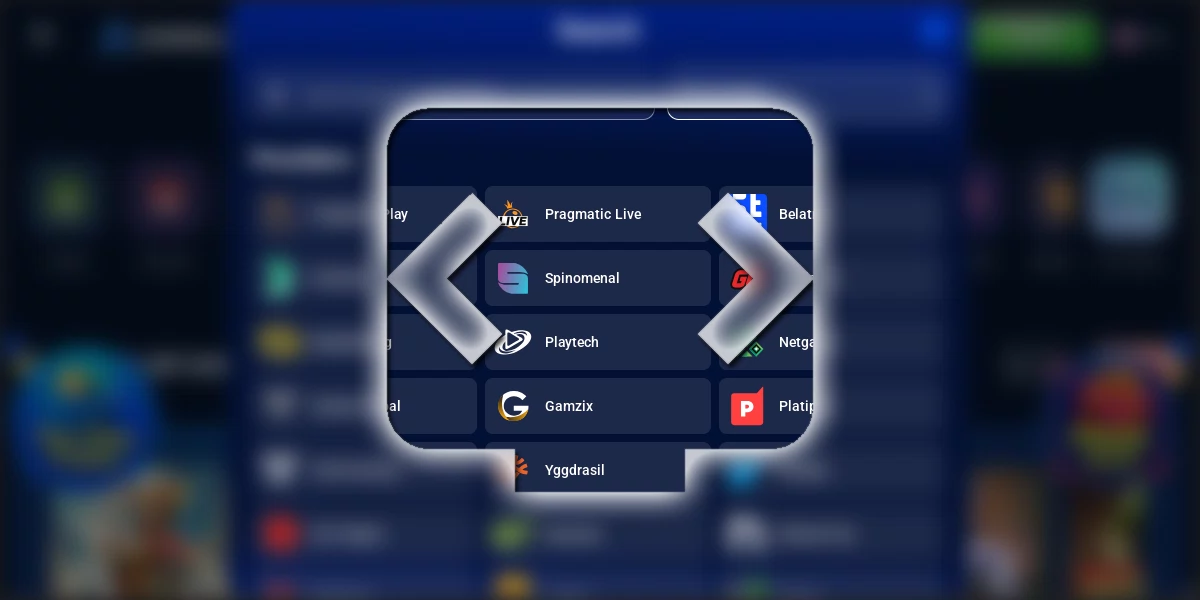
Blurred casino game providers list with Developer that cuts through blurr and shows developers menu with options such as Pragmatic Play, Spinometal, Playtech, Gamzix, and others.

Online casino software is the collection of games, platform code and back-office tools that allow a gambling site to open its doors. Players often use the term gaming software for the same stack, while the titles themselves are the visible layer. That stack covers the lobby a player sees, the mathematics behind every spin, the wallet that holds the balance, the bonus engine that applies wagering rules and the reporting tools that keep the operator compliant. No single program does all of this. A modern casino runs on a stack of connected systems, and each layer can come from a different supplier.

Players usually judge software by what they can see. A lobby that loads quickly, a slot that pays according to its published RTP and a cashier that completes a withdrawal without errors all feel like one product. In reality, those pieces may come from three separate companies. Operators judge software by what they cannot see, including uptime, integration speed, reporting accuracy, fraud controls and the cost of adding a new market. Both views matter because a weak layer can damage an otherwise strong casino.

Game Content

Game studios build the casino game software behind the slots, table games, live dealer titles and crash games that players recognize. A large casino may carry content from more than 100 studios, which is why provider lists have become a selling point. AzurSlot, for example, lists 157 providers across an 18,000+ game library, while Tiki names 136 providers and more than 14,585 games.

Platform and Player Account Management

The platform handles registration, login, balances, bonuses, limits, KYC checks and reporting. This layer is often called a PAM system, short for player account management. It decides whether a bonus is available, how much of a withdrawal is pending and which regulator receives which report.

Player-Facing Software

The frontend includes the website, mobile lobby, game client, search filters and cashier. Good frontend software makes a catalog of thousands of games feel manageable. Bad frontend software turns the same catalog into a slow maze that pushes players toward the exit.

Operator-Facing Software

The back office covers CRM, bonus configuration, risk scoring, payment routing, responsible gambling controls and audit logs. Operators spend more time in this layer than players ever will, and its quality determines how quickly a promotion or a regulatory change can go live.

The phrase casino software provider can therefore mean a game studio, a platform vendor, an aggregator or a white label supplier. The rest of this guide separates those roles because a casino with an excellent game library may still run on a mediocre platform, and a well-built platform cannot rescue a thin game catalog. The best operators combine both, then add payment and retention tools that fit their market.

How Gambling Software Works: Frontend, Backend, RNG and APIs

Every wager passes through several systems before a result appears on screen. The frontend sends the request, the game server calculates the outcome, the wallet checks the balance and the reporting layer records the transaction. A break at any point can cause a frozen game, a missing bonus or a withdrawal delay. Understanding the flow helps players spot the difference between a cosmetic problem and a structural one.

1

The Player Opens the Lobby

The browser or app loads the frontend, which pulls game thumbnails, categories and account details from the platform. A well-built lobby uses lazy loading and a content delivery network so that a library of 10,000 games does not arrive all at once. Search, provider filters and recently played sections are usually generated by the platform rather than hard-coded into the page.

2

The Game Client Requests a Round

When a player presses spin, the game client sends a request to the studio's game server. The server runs the game math, produces an outcome and returns the result to the client for animation. The client never decides the result. It only displays what the server sends, which is why a slow connection can delay the animation without changing the outcome.

3

The RNG and Game Math Determine the Result

A random number generator produces the raw randomness behind each round. The game math then maps that number to a symbol combination, a card draw or a wheel segment according to the title's payout model. Independent labs such as eCOGRA, iTech Labs and GLI test these systems and review the published RTP. The tests do not guarantee a win, but they do confirm that the game behaves as described over millions of rounds.

4

The Wallet Checks and Moves Funds

The platform wallet verifies that the player has enough available balance, places the bet and credits any return. Some casinos keep a single wallet for casino, sportsbook and live dealer play, while others separate bonus funds from cash. Shared wallets are more convenient, but players should check whether bonus money can be used across every product and how the order of deduction works.

5

The Bonus Engine Applies the Rules

If a player is wagering a bonus, the bonus engine checks game eligibility, contribution rates and remaining turnover. Table games often contribute less than slots, and live dealer titles may contribute nothing at all. The engine also decides when a bonus expires and whether a withdrawal request must wait until wagering is complete.

6

Reporting and Compliance Record the Activity

The platform logs the bet, the result, the balance change and the device details. These records support KYC checks, AML monitoring, dispute resolution and regulatory reporting. A platform that cannot produce a clean audit trail creates problems for the operator and delays for the player, especially when a large win triggers additional verification.

APIs connect these layers. A single integration can give an operator access to hundreds of studios, a payment gateway or a KYC service without building each connection from scratch. Aggregators are effectively API businesses, and their value depends on uptime, latency and the quality of the studios behind the catalog. When an aggregator goes down, every casino connected to it loses access to those games at the same time.

For players, the practical lesson is simple. A casino that loads fast, keeps game results consistent and processes withdrawals without repeated errors probably has a healthy stack. A casino that freezes during peak hours, loses bonus progress or changes withdrawal rules after a win may be running cheap infrastructure or poor integrations. The provider logo in the footer tells only part of the story.

Types of Online Casino Software Providers: Platform, White Label, Turnkey and Aggregator

The iGaming software market has split into studios, platform vendors, aggregators and white label suppliers, yet the same job title is used for companies that do very different work. A studio that makes slots is not the same as a platform that holds player accounts, and neither is the same as a white label supplier that rents a complete casino to a brand. That is why operators can choose from several casino software solutions, from a single studio integration to a full white label package. Operators need to know which model they are buying, and players benefit from understanding why two casinos can look different while running on the same engine.

Game Studios

Game studios design and build titles, then license them to operators or aggregators. NetEnt, Pragmatic Play, Playtech and Evolution are the best-known examples. A studio controls the math, art, sound and feature design of its games, but it usually does not manage player accounts or hold the casino license.

Platform and PAM Providers

Platform providers supply the account system, wallet, bonus engine, CRM, reporting and integrations that run the casino. Some also offer a sportsbook or a PAM module for retail operations. The platform is the operational core, and switching it after launch is expensive, so operators tend to stay with a platform for years.

White Label Casinos

A white label supplier provides the platform, games, license and often the payment connections under its own regulatory umbrella. The operator adds a brand, marketing and customer support. White label launches can happen in a few weeks, but the operator has limited control over the technology and little room to customize player journeys.

Turnkey Casinos

A turnkey package includes the platform, game integrations, back office and launch support, usually under the operator's own license. It takes longer than white label and costs more, but the operator keeps more control over branding, payments, bonuses and data. Most mid-sized brands choose this route when they want ownership without building every system in-house.

Aggregators

Aggregators connect operators to many studios through one API. They solve the commercial and technical headache of signing dozens of separate content deals. The trade-off is another layer between the operator and the studio, which can affect latency, roadmap decisions and access to exclusive titles.

Live Dealer Specialists

Live dealer providers run physical studios, cameras, dealers and streaming infrastructure. Evolution leads the category, with Playtech and Pragmatic Play also offering live tables. These suppliers need broadcast-quality production and redundant studios, which is why the live segment has fewer credible providers than the slots market.

Hybrid models are common. Playtech supplies games, platform technology and live dealer content. Pragmatic Play offers slots, live casino and promotional tools. Evolution owns Red Tiger and NetEnt, which gives it both live and random number generator content. For operators, the right model depends on the license, the target market, the launch timeline and the level of control they want. For players, the model explains why a new casino can open with thousands of games on day one while another site spends months building a smaller exclusive catalog.

Key Features of the Best Casino Gaming Software

Feature lists from vendors tend to look alike. Every platform claims to be scalable, secure and mobile friendly. The differences appear under load, during a regulatory audit or when a player tries to withdraw at 2 a.m. The features below are the ones that separate software that supports growth from software that creates bottlenecks.

Library Depth and Variety

A strong catalog covers slots, table games, live dealer titles, crash games and regional favorites. Depth matters more than a headline game count because 10,000 near-identical slots do not serve players as well as 3,000 titles across several formats. Provider variety also reduces the risk of one studio's outage taking down the whole lobby.

Transparent Game Math

Published RTP, volatility information and clear paytable rules build trust. Top studios test their games with independent labs and keep the return figure consistent across markets. Operators should avoid silent RTP reductions because players notice when a familiar game starts paying less than its published version.

API and Integration Quality

Good APIs are documented, versioned and supported by a sandbox. They allow an operator to add a studio, a payment method or a KYC provider without rebuilding the platform. Poor APIs create fragile integrations that break during updates and require manual fixes from the support team.

Mobile Performance

Most players now arrive on a phone, so the lobby, game client and cashier must work on small screens and weak connections. HTML5 games should scale without pinching or zooming, and live dealer streams should adapt to lower bandwidth instead of freezing. A desktop-only platform is a commercial handicap.

Localisation

Language, currency, date format and payment methods all affect conversion. A casino that shows prices in euros to a Canadian player or offers no local payment option will lose trust before the first deposit. Strong software supports translated content, local helpline information and market-specific game restrictions.

Back Office and Reporting

The back office should make it easy to find a player, adjust a bonus, review a withdrawal and export a report. Clean reporting is essential for licensing, tax and AML obligations. Operators should test how long it takes to answer a simple question such as how much a player wagered last month.

Payments and Wallet Architecture

The platform must support the payment methods that matter in each market, including cards, e-wallets, bank transfers, vouchers and crypto. It also needs a wallet model that handles bonus funds, pending withdrawals, chargebacks and currency conversion without creating duplicate balances or accounting errors.

CRM and Bonus Engine

Static bonuses are easy to build. Behavior-triggered offers, free spin campaigns, cashback tiers and tournament logic require a flexible engine. The best systems let operators target a segment, test an offer and measure the result without asking a developer to write new code for every promotion.

Compliance and Responsible Gambling

KYC, AML screening, deposit limits, loss limits, reality checks, self-exclusion and audit logs should be native parts of the platform. Bolting these tools on after launch creates gaps between the casino, the regulator and the player. Compliance features are not optional extras in a licensed market.

Uptime and support deserve their own check because they affect every feature above. A platform that promises 99.9 percent uptime still allows roughly eight hours of downtime a year, while 99.99 percent cuts that to under an hour. Operators should ask for a written service level agreement, an incident response time and a clear escalation path. Players should treat repeated outages, missing game history or slow support as signs that the operator has cut corners on infrastructure.

Top Online Casino Software Providers in 2026

The top casino software providers in this list appear repeatedly at the casinos in our reviews, and each one has a clear strength. The table compares the best casino software providers by what they are known for, where they stand out and a verified casino example from our reviews. A large game count is not the only measure. Consistency, mobile performance, math quality and integration support matter just as much.

ProviderKnown ForStandout StrengthCasino Example
NetEntStarburst, Gonzo's Quest, Dead or AlivePolished slots, strong mobile performance and an average RTP around 96 percentAzurSlot, 22Bet, Tsars
PlaytechAge of Gods, branded slots and 700+ gamesScale across slots, table games and live casinoAzurSlot, 5Gringos, OnlyWin
Pragmatic PlayBig Bass Bonanza, Gates of Olympus, Wolf GoldSlots, live dealer content and the Drops and Wins promotional frameworkAzurSlot, 20Bet, BetLabel
EvolutionLive dealer tables and game showsLightning Roulette, Crazy Time and a large live studio networkTiki, Betibet, Winrolla
MicrogamingMega Moolah and progressive jackpotsLong-running library, jackpot network and table game coverage22Bet, MegaPari, MyStake
BetsoftCinematic 3D slotsVisual presentation, accessible table games and a strong US-facing presenceBovada, BetOnline, Lucky Tiger
AmaticBook of Aztec, Lucky Joker 100Retro fruit machines, Book-style slots and Hold and Win releasesBitStarz, MegaPari, MyStake
Play’n GOBook of Dead and ReactoonzMobile-first design and original slot mechanics20Bet, Tsars, BetLabel
Hacksaw GamingHigh-volatility slotsDistinctive art and bonus-heavy game mathTiki, Lucky Coin, BetPlay
Nolimit CityHighly volatile slotsExtreme variance and layered bonus mechanicsLucky Coin
Red TigerDaily jackpot slotsPolished slots, jackpot tools and Evolution ownershipLucky Coin
SpribeAviator and provably fair crash gamesShort rounds and a format built for crypto casinosWild.io, BetPlay, MyStake
BGamingSlot content for crypto casinosCatalog presence at crypto-focused brandsWild.io, BetPlay, BetLabel
YggdrasilVikings Go Berzerk, Gigablox and SplitzDistinctive mechanics and the YG Masters programTiki, BetPlay, Winrolla
QuickspinBig Bad Wolf and fairy-tale slotsCareful production and quality over volumeTsars, Tiki, Winrolla
Rival Gamingi-Slots and classic US-facing slotsInteractive storylines and a long-running US-facing catalogSlots Capital, Bovada, BetOnline
RTG (RealTime Gaming)Aztec's Millions, Cash Bandits 3, Bubble BubbleUS-facing library and progressive jackpot networkSlotoCash, Uptown Aces, Lucky Tiger
SaucifyThe Purse of the Mummy and classic slotsRetro slot style and table games for US-facing lobbiesLucky Tiger, 22Bet
Dragon GamingThe Rooster & The Fox, Top DiamondColorful slots with 1,024-ways and bonus-buy featuresBovada, BetUS, Miami Club
Nucleus GamingFor the Realm! DeluxeUS-facing slots, table games and video pokerBovada, BetUS, Super Slots
Visionary iGamingLive blackjack, roulette and baccaratUS-facing live dealer tables with Early PayoutBovada, BetOnline, Everygame
Fresh Deck StudiosLive blackjack, roulette and Super 6Live dealer tables for US-facing casinosBetOnline, BetUS, Super Slots
WGS TechnologyWheel of Chance Multiways, Money ShotLegacy platform, slots, table games and video pokerMiami Club, Red Stag, Everygame
Arrow's EdgeBack to the 60s, Big Salmon RunBonus-buy slots and table games for US-facing casinosBetOnline, BetUS, Miami Club
Qora GamingCyberpunk City, Lair of the White TigerProgressive slots and table-game varietyBetOnline, Bovada, Slots Capital

NetEnt remains the reference point for slot polish. Its library is smaller than the biggest aggregators, with a few hundred titles, but games such as Starburst and Gonzo's Quest have stayed relevant for years. The studio also builds responsible gambling controls into its platform module, including play limits, loss limits and reality checks. That combination of recognizable games and operational discipline explains why so many casinos still put NetEnt near the top of their provider list.

Evolution dominates live dealer content for a different reason. The company turned a live stream of a roulette table into a full production, then added game shows such as Crazy Time and Monopoly Deal. Its acquisition of NetEnt and Red Tiger gave it reach across live and random number generator content. Casinos that want a complete live lobby usually start with Evolution, then add Playtech or Pragmatic Play for extra table variety.

Pragmatic Play sits in the middle of the market and covers more ground than most rivals. It produces slots, live casino tables, bingo and promotional tools, and its Drops and Wins framework gives operators a ready-made retention campaign. Playtech appeals to operators who want a single supplier for platform, content and live dealer services, while Microgaming remains the safe choice for progressive jackpots and a broad table game library.

The challengers bring a different kind of value. Hacksaw Gaming and Nolimit City target players who want high volatility and unusual bonus mechanics. BGaming has built a following at crypto-focused casinos, and its titles appear at Wild.io, BetPlay and BetLabel. Red Tiger adds daily jackpots and polished slot design under the Evolution umbrella. Yggdrasil is known for its Gigablox and Splitz mechanics, and Quickspin focuses on carefully produced slot releases under Playtech ownership. None of these studios need to match Playtech on volume because they compete on style and math.

The US-facing side of the market runs on a different roster. Rival, RTG, Saucify, Dragon Gaming, Nucleus Gaming and Arrow's Edge supply the slots and table games found across Bovada, BetOnline, BetUS, Slots Capital and Lucky Tiger, while Visionary iGaming and Fresh Deck Studios handle live dealer tables. These studios are the practical backbone of offshore casinos that accept American players. WGS Technology adds legacy slots, table games and video poker, while Qora Gaming covers modern slots and table-game variety. Players in the United States should confirm state eligibility before signing up because the operator's terms, not the studio, decide who can play.

Provider count claims deserve scrutiny. A casino that lists 150 providers may be counting aggregator sub-brands, dormant studios and regional content that never appears in the main lobby. Players should look for named studios they recognize, check whether the games actually load and confirm that the library is available in their country. Betibet, AzurSlot and Tiki all pass that test with more than 130 named providers, but the names matter more than the total. The best software providers also publish clear integration documentation and support the operator after launch.

Best Online Casino Software by Category: Slots, Live Dealer, Table Games and Mobile

No single provider leads every category. A studio that builds brilliant slots may have no live dealer studio, and a platform with excellent table games may lag behind on crash content. The category view helps players choose a casino for the games they actually play rather than for a headline provider count.

Slots

Slots make up the bulk of most casino libraries. NetEnt delivers polish and recognizable titles such as Starburst and Gonzo's Quest. Pragmatic Play covers a huge range of themes with Big Bass Bonanza and Gates of Olympus. Play’n GO brings mobile-first design and games such as Book of Dead and Reactoonz. Hacksaw Gaming and Nolimit City serve players who want higher volatility and less conventional bonus rounds. For US-facing lobbies, Rival, RTG, Dragon Gaming and Nucleus Gaming fill the same role with i-Slots, progressive jackpots and bonus-buy titles. AzurSlot, Tiki and Betibet all carry strong slot catalogs from these studios.

Live Dealer

Evolution is the first name in live dealer content, with Lightning Roulette, Crazy Time and a deep blackjack and baccarat menu. Playtech and Pragmatic Play provide credible alternatives and extra table variety. Live casino software consumes more bandwidth than slots, so the quality of the streaming integration matters as much as the studio name. Tiki, Betibet and Winrolla all include Evolution titles in their live lobbies. In the US-facing market, Visionary iGaming and Fresh Deck Studios provide the live tables at Bovada, BetOnline, BetUS and Super Slots.

Table Games

Microgaming, Playtech and Betsoft offer broad table game coverage, including multiple blackjack and roulette variants. IGT is a specialist in classic table games and video poker, with a style that favors authenticity over visual effects. Rival, RTG, WGS Technology and Qora Gaming add blackjack, video poker and specialty games for US-facing casinos. Bovada and BetOnline carry table game menus that suit players who prefer blackjack, roulette and poker to slots.

Crash and Provably Fair Games

Crash games and provably fair originals appeal to crypto players who want fast rounds and verifiable outcomes. Spribe is a common name in this segment, and Pragmatic Play has also embraced crash-style content. Wild.io, BetPlay and MyStake all offer provably fair or crypto-native games alongside traditional slots.

Progressive Jackpots

Microgaming built its reputation on networked jackpots such as Mega Moolah. RTG carries its own progressive network, including Aztec's Millions and Spirit of the Inca at SlotoCash. Red Tiger adds daily jackpot slots with more frequent, smaller payouts. Players who chase jackpots should check the contribution rules and the maximum bet that qualifies for the jackpot.

Mobile-First Casinos

Pragmatic Play, Play’n GO and NetEnt all design their games for touch screens first. The casino frontend matters just as much as the studio. 20Bet loads a full casino in under three seconds on a 4G connection according to our review, while MegaPari offers biometric login in its mobile app. A strong mobile casino keeps the lobby, cashier and bonus center usable on a small screen.

Players who split their time between categories should prioritize casinos with genuine multi-studio libraries. AzurSlot, Betibet and Tiki carry the strongest provider mix in our casino reviews because they combine slots, live dealer content and table games from a wide range of providers. A single-studio casino can still be excellent for one type of game, but it limits choice when a player wants something different.

Online Casino Software Licensing, Fairness and Security

Online gambling software has to satisfy two different licenses in this market. The operator needs a gambling license to accept bets from players in a jurisdiction. The software supplier needs its own approvals or certifications to provide games and platform services. A casino can hold a valid operator license while running games from a studio that is not certified in the player's country, which is why both sides deserve a check.

RegulatorTypical RoleWhat Players Should Check
Malta Gaming AuthorityLicenses operators and suppliers across the European Union and beyondA current license number, the accepted countries and the complaint process
UK Gambling CommissionRegulates British gambling operators and suppliersGAMSTOP registration, credit card restrictions and clear affordability rules
Curaçao Gaming AuthorityLicenses many international operators and suppliersThe exact license number, the company behind the brand and the player complaint route
Anjouan Gaming AuthorityLicenses offshore operators, often with lighter oversightWhether the casino publishes clear terms and responds to disputes
Kahnawake Gaming CommissionLicenses operators connected to the Mohawk territory in CanadaThe license status and whether the casino accepts players from the target market
Tobique Gaming CommissionLicenses operators through a First Nations framework in New BrunswickThe scope of the license and whether it covers casino, sportsbook or both

License quality is not binary. The Malta Gaming Authority and the UK Gambling Commission impose detailed capital, reporting and player protection requirements. Curaçao and Anjouan have lighter frameworks, which can mean faster launches and less player recourse. A Curaçao license is not automatically unsafe, but players should understand that the dispute process is different from a UK or Malta complaint. AzurSlot, for example, publishes a Curaçao license that we verified through the official eGaming portal. Tsars and Lucky Coin operate under Anjouan licenses, and our reviews note the limited player recourse that comes with that setup.

Fairness is a separate question from licensing. A random number generator should be tested by an independent lab such as eCOGRA, iTech Labs or GLI. The lab checks that outcomes are random, that the game math matches the published RTP and that the software has not been altered after certification. Provably fair games add another layer because players can verify the outcome using cryptographic seeds. That does not make a game profitable, but it does make the result auditable.

Security controls protect the player account and the money inside it. Look for SSL encryption on every page, PCI DSS compliance for card payments, segregation of player funds where the license requires it and clear KYC and AML procedures. A casino that asks for documents before a large withdrawal is not necessarily stalling. Licensed operators are required to verify identity and source of funds. The problem starts when a casino applies those checks inconsistently or changes the rules after a win.

Supplier certification adds another layer. NetEnt holds licenses in multiple European jurisdictions and US states, and works with eCOGRA on fairness testing. Playtech and Evolution operate under their own regulatory approvals. These credentials do not cover the casino itself, but they do reduce the risk of rigged games or unexplained software changes. Players should treat a named, certified studio as one positive signal among several.

Mobile Casino Software and Cross-Device Performance

Most online casino sessions now start on a phone, and the software stack has to support that reality. Browser-based HTML5 games have replaced most downloadable clients because they work across iOS, Android and desktop without a separate install. The casino lobby, cashier and bonus center must adapt to the same screen, often on a connection that is slower and less stable than home broadband.

Instant Play and HTML5

HTML5 games load inside the browser and scale to the screen size. They avoid the friction of an app store download and work on devices that do not allow gambling apps. The trade-off is that performance depends on the browser, the device and the casino's content delivery setup. A poorly optimized HTML5 lobby can feel slower than a native app even when the games themselves are lightweight.

Native Apps and Biometric Login

Some operators still offer native apps for loyal players. MegaPari supports biometric login on iOS and Android, and BetOnline offers a mobile app alongside its browser casino. Apps can deliver faster access and push notifications, but they also require updates and can be unavailable in markets that restrict gambling software in app stores.

Live Dealer Streaming

Live dealer games are the hardest mobile test. The stream must adapt to changing bandwidth, the betting interface must remain usable and the dealer video should stay in sync with the results. Evolution and Playtech have invested heavily in mobile streaming, but the casino's player and the local network still determine the final experience. Players on weak connections should favor tables with lower video quality options.

Cross-Device Account State

A player should be able to start a slot on a phone, open the lobby on a laptop and find the same balance, bonus progress and game history. That requires a platform with a single account and wallet state rather than separate products stitched together. Shared wallets at AzurSlot and MyStake make this transition smoother because the casino and sportsbook balances do not need to be moved manually.

Our mobile checks focus on five practical points. The lobby should load without horizontal scrolling. The game tiles should be large enough to tap. The cashier should remember the selected payment method. The bonus terms should be readable without zooming. The session should survive a brief network drop without losing the round. These details decide whether a casino feels native on a phone or merely shrunk down from a desktop layout.

Casinos that get mobile right usually get the desktop experience right as well, because both rely on the same platform and game integrations. A site that behaves badly on a phone is often struggling with the same underlying issues on desktop. Players should test the lobby, one slot, one live table and the cashier before making a deposit. That short trial reveals more than a long feature list.

Payment, Crypto and Wallet Integration in Casino Software

Payments are where software quality becomes obvious to players. A platform can have thousands of games and still lose customers if the cashier declines cards, delays withdrawals or hides fees. Good payment software routes each transaction to the right provider, applies the correct currency and bonus rules and gives support staff a clear view of the withdrawal queue.

Payment TypeExamples From Our CasinosStrengthsWatchouts
CryptoBTC, ETH, USDT, LTC, DOGE at AzurSlot, Tiki, BetPlay and Lucky CoinFast settlement, global reach and low network fees on some chainsPrice volatility, irreversible transfers and KYC checks on large withdrawals
CardsVisa and MasterCard at AzurSlot, Decode and SlotoCashFamiliar checkout and broad acceptanceDeposit fees, declined transactions and slower refunds
E-WalletsSkrill, Neteller, MiFinity and EcoPayz at MegaPari, 20Bet and BetibetQuick transfers and a layer between the bank and the casinoSome casinos exclude e-wallet deposits from welcome bonuses
Bank TransferBank wire and Interac at Tiki, Decode and 5GringosHigh limits and local banking rails in some marketsProcessing times of several business days and possible fees
Vouchers and PrepaidNeosurf and Paysafecard at SlotoCash, Lucky Tiger and 22BetBudget control and no direct bank linkOften deposit-only and less useful for withdrawals

Wallet architecture matters as much as the payment method list. Some platforms hold one balance for casino, sportsbook and live dealer play. Others separate real money, bonus money and winnings into different buckets. A shared wallet is convenient, but players should check whether bonus funds can be used on every product and which balance is spent first. A separated wallet can protect a cash balance from bonus wagering rules, but it also adds friction when a player wants to move between products.

Crypto support has become a differentiator for international casinos. AzurSlot accepts 24 deposit methods across crypto, cards, e-wallets and vouchers. Tiki supports more than 20 cryptocurrencies alongside Interac and bank transfer. BetOnline processes same-day crypto payouts, MyStake handles instant crypto withdrawals under $2,000 and BetPlay charges no fees on crypto withdrawals. These details come from our reviews and matter more than a generic promise of fast payouts.

Fees and limits deserve a close read. A casino may advertise free deposits but charge for bank withdrawals under a certain amount. 20Bet, for example, applies a €5 fee to bank transfers below €100 according to our review. Others impose daily or monthly withdrawal caps that are not obvious until the cashier stage. Players should check the minimum deposit, the minimum withdrawal, the processing time and the fee schedule before claiming a bonus, because bonus terms often interact with payment rules.

KYC is part of the payment stack, not a separate inconvenience. Licensed casinos must verify identity, address and sometimes source of funds before releasing large amounts. A smooth process lets players upload documents early and tracks the review status. A poor process asks for the same document twice, loses the file or blocks the account without explanation. The best payment software connects KYC, fraud scoring and withdrawal approval so that legitimate players move through quickly and suspicious activity gets flagged before the payout.

CRM, Bonuses and Player Retention Tools

Acquiring a player costs far more than keeping one, so casino software now includes a retention layer that rivals the game lobby in importance. The bonus engine, CRM, VIP system and gamification tools decide how often a player returns, how long a session lasts and whether a first deposit turns into a long-term account. When those tools are poorly configured, players see confusing offers and support teams spend their day fixing bonus errors.

Bonus Engine and Wagering Rules

The bonus engine defines eligibility, contribution rates, maximum bets, expiry windows and withdrawal restrictions. Betibet spreads its welcome value across nine deposits, which requires a more complex engine than a single match offer. OnlyWin stacks daily, weekly and VIP cashback, and each layer needs its own rules. A clear engine shows the remaining wagering inside the account rather than forcing players to calculate it from the terms page.

Gamification and Challenges

Missions, challenges, leaderboards and collectible currencies turn ordinary play into a progression system. Tiki converts gameplay into COINs that can be spent in its Casino Shop, while 5Gringos uses character selection to unlock personalized bonus paths. These features work when the rewards are achievable and the rules are visible. They backfire when players discover that the progress bar is designed to encourage overspending.

VIP and Cashback Programs

VIP tiers reward loyal players with cashback, faster withdrawals, dedicated managers and event invitations. Lucky Coin runs a 31-level Degen Club that starts at 21% total rewards and climbs to 47%, and Winrolla offers a five-tier program with up to 15 percent cashback. Cashback is most valuable when the qualifying losses are clear and the wagering requirement is low. Betibet pays daily cashback on net losses, with rates that rise with the deposit level and the VIP tier. Players should compare the qualifying losses, the payment schedule and the withdrawal terms before chasing a tier.

Real-Time CRM and Segmentation

Modern CRM tools group players by behavior, value, location and risk. A casino can send a free spin offer to a player who has not logged in for a week, a cashback reminder to a high-volume player or a responsible gambling message to someone whose session length is rising. The best systems trigger these actions automatically and measure the result. The worst systems send the same generic email to everyone and call it personalization.

Tournaments add another retention layer. Winrolla runs the Spinoleague with a €12,000,000 prize pool, Tiki promotes a VoltEnt Booster tournament worth €6,500,000 and 20Bet runs monthly Drop and Wins campaigns with €2 million prize pools. These events create a reason to play during a specific window, but they also encourage longer sessions. Players should treat tournament entries as entertainment spending rather than a reliable route to profit.

Retention tools and responsible gambling controls should live in the same system. If a player sets a deposit limit, the CRM should stop sending deposit-match offers that exceed it. If a player self-excludes, the bonus engine should close open offers and the marketing list should update immediately. Tiki is a useful example of the gap that can appear. Our review found only two of ten standard responsible gambling tools available, even though the casino has a deep gamification system. Strong retention software without strong player protection is a warning sign, not a selling point.

How Much Does Online Casino Software Cost?

Casino software pricing depends on the license, the platform model and the number of markets an operator wants to serve. A white label launch can cost less than a custom build because the supplier already owns the technology and the regulatory umbrella. A directly licensed operator with its own platform, payment stack and content deals will spend far more before the first player arrives. The table below gives a realistic planning range rather than a quote.

Cost CategoryEstimated Cost (USD)What It Covers
Company formation and legal setup$2,000 to $30,000Incorporation, legal documents, shareholder structure, contracts and legal advice
Gambling license and regulatory compliance$5,000 to $150,000+Application, annual license, due diligence, compliance and audit costs
Casino platform and back office$5,000 to $150,000+White label at the low end, turnkey or customized platforms at the high end
Website design, branding and localization$2,000 to $75,000+Casino website, user interface, mobile design, brand assets and language versions
Game content and aggregator integration$5,000 to $100,000+Slots, live casino, table games, crash games, jackpots and provider integrations
Payment gateway integrations$1,000 to $40,000+Cards, bank transfers, e-wallets, crypto, payouts, fraud controls and provider onboarding
KYC, AML, fraud and responsible gambling tools$2,000 to $30,000+Identity verification, sanctions screening, transaction monitoring, limits and reporting
Hosting, cybersecurity and technical testing$2,000 to $50,000+Cloud hosting, DDoS protection, penetration testing, monitoring and backups
RNG certification and compliance testing$5,000 to $50,000+Independent testing required by some licenses and jurisdictions
Initial marketing and player acquisition$10,000 to $500,000+SEO, paid search, affiliates, influencers, sponsorships, bonuses and creative production
Working capital and withdrawal reserve$10,000 to $500,000+Player withdrawals, jackpot exposure, chargebacks, payment reserves and operating cash
Estimated total startup budget$50,000 to $1,000,000+A small white label can launch near the low end, while a directly licensed multi-market casino needs far more

The commercial model matters as much as the total. Many software suppliers charge a setup fee plus a revenue share on net gaming revenue, and some add a monthly minimum. A low setup fee can hide a high revenue share or a minimum that becomes painful in a slow month. Operators should model three scenarios before signing, including a strong first quarter, a flat quarter and a quarter with a large jackpot payout. The contract should also cover data ownership, exit fees and what happens to player accounts if the relationship ends.

White label operators can often launch for under $100,000 because the supplier absorbs the platform and license costs. A directly licensed brand running its own platform across several regulated markets can cross seven figures before launch. The gap is not only technology. Direct licensing brings legal, compliance, reporting, audit and banking work that a white label supplier handles behind the scenes. Operators should choose the model that matches their control requirements rather than the lowest headline price.

Marketing and working capital are the costs that new operators underestimate most often. A casino with excellent software but no acquisition budget will not attract players, and a casino without a withdrawal reserve can freeze payouts after a run of wins. Payment providers may also hold a rolling reserve for chargebacks, which ties up cash for months. A realistic budget treats software, licensing, marketing and reserves as one plan rather than separate line items.

How to Choose the Right Online Casino Software Provider

Choosing a provider is a series of trade-offs, not a search for the biggest logo. The right supplier for a white label brand in Curaçao is rarely the right supplier for a directly licensed operator in Ontario. The process below starts with the market and works backward to the technology, which is the opposite of how most sales presentations are structured.

1

Match the License to the Target Market

List every country the casino intends to serve, then confirm which license each one accepts. A Malta or UK license carries more credibility in Europe but brings stricter reporting and player protection duties. A Curaçao or Anjouan license can support an international launch with less overhead, but it may not satisfy banks, payment providers or players in regulated markets. The license decision affects the platform, the payment stack and the marketing plan.

2

Check Portfolio Fit, Not Just Game Count

Ask for the studio list behind the headline number and confirm that the games players in the target market actually want are included. A catalog built for European slot players may lack the crash games, local-language live tables or regional favorites needed in Latin America or Asia. Named studios such as NetEnt, Pragmatic Play and Evolution are useful signals, but the full mix matters more than the total.

3

Choose the Deployment Model

White label is the fastest route and offers the least control. Turnkey sits in the middle, with more configuration and the operator's own license. A custom platform or direct API build takes the longest but gives the operator full ownership of the technology and data. The right choice depends on the launch timeline, the budget and how much differentiation the brand needs.

4

Test the Payments and Wallet

Run a live test of the methods that matter in each market, including a deposit, a withdrawal and a failed transaction. Check how the platform handles bonus funds, pending withdrawals, currency conversion and chargebacks. Ask whether the casino, sportsbook and live dealer products share one wallet. A payment method that appears on the marketing page but fails at checkout is worse than no method at all.

5

Review the CRM and Bonus Engine

Ask for a demonstration of a segmented campaign, a free spin offer, a cashback rule and a tournament. Confirm that the operator can change the rules without a developer and that the player sees the remaining wagering inside the account. The bonus engine should also respect deposit limits and self-exclusion flags. Retention tools that ignore responsible gambling controls create regulatory and reputational risk.

6

Verify Compliance and Responsible Gambling

Check KYC, AML screening, sanctions lists, age verification, deposit limits, loss limits, reality checks, self-exclusion and audit logs. Ask how the platform reports suspicious activity and how quickly it can freeze an account. A supplier that treats these features as optional add-ons will struggle in any regulated market. The cost of retrofitting compliance is far higher than building it from the start.

7

Demand a Written Uptime and Support Commitment

A 99.9 percent uptime promise sounds strong until it is translated into roughly eight hours of downtime a year. Ask for the service level agreement, the incident response time, the escalation path and the maintenance window. Confirm whether updates happen live or require an outage. A platform that cannot answer those questions in writing is not ready for a production launch.

8

Read the Contract and Plan the Exit

Check the revenue share, the monthly minimum, the setup fee, the data ownership terms and the notice period. Ask what happens to player accounts, historical data and open bonuses if the relationship ends. A cheap contract with no exit plan can become expensive when the operator wants to switch suppliers. The best time to negotiate an exit is before the first player signs up.

Shortlist three suppliers and test each one against the same scenario. Request a sandbox, a back office demo and a reference from an operator in a similar market. Run a small pilot before committing to a long contract if the supplier allows it. The goal is not to find the vendor with the longest feature list. It is to find the one that can support the license, the payments and the player experience without constant manual work.

Online Gambling Software Development: Process, Timeline and Integration

The software developers, platform vendors and operators behind a casino launch follow a predictable sequence even when the commercial model changes. The early decisions set the cost and the timeline, and the late decisions determine whether the launch feels polished. Most delays come from licensing, payment approvals and integrations rather than from the frontend design.

1

Discovery and Market Planning

The operator defines the target markets, the license strategy, the product mix and the budget. This stage should produce a written scope covering casino, sportsbook, live dealer, payments, languages and currencies. A vague scope leads to a platform that tries to serve every market and excels in none.

2

Licensing and Corporate Setup

The operator applies for the gambling license, incorporates the company and opens bank accounts. Due diligence can take weeks or months depending on the jurisdiction. Payment providers and game suppliers will ask for the license, ownership documents and compliance policies before they sign contracts, so this work sits on the critical path.

3

Platform Selection and Architecture

The operator chooses white label, turnkey or custom, then maps the integrations for content, payments, KYC and CRM. A modular architecture makes it easier to replace one supplier without rebuilding the whole stack. The platform should support the target traffic level, the required currencies and the reporting obligations of each license.

4

Content and Game Integration

Studios and aggregators are connected through APIs, then the lobby is configured with categories, search filters and regional restrictions. Each game needs the correct RTP variant, currency settings and market availability. A game that is certified in one jurisdiction may not be approved in another, so the content matrix has to match the license.

5

Payments, KYC and Responsible Gambling

Payment gateways are connected and tested, including deposits, withdrawals, refunds and chargebacks. KYC and AML tools are configured for the target markets, and responsible gambling controls are set to the license requirements. This stage often reveals gaps in the platform that were not visible in the sales demo.

6

Frontend, Branding and Localization

The website, mobile lobby, cashier and bonus center are designed around the brand and the target audience. Language, currency, date format, help content and payment order should all match local expectations. The frontend is the part players judge first, but it should be built on top of a stable platform rather than used to hide problems underneath.

7

Testing, Certification and Soft Launch

The operator runs functional testing, load testing, security testing and payment testing. Regulated markets may require independent certification of the random number generator, the platform or both. A soft launch with limited traffic exposes bugs before a full marketing push. Support scripts, escalation paths and incident response plans should be ready before the first real player arrives.

8

Launch and Continuous Optimization

After launch, the work shifts to conversion, retention and compliance. The team monitors lobby performance, deposit success rates, bonus uptake, withdrawal times and support tickets. New games, payment methods and promotions are added through the platform. A casino is never finished because player expectations and regulations keep moving.

Timelines vary widely. Some white label vendors advertise launches in two to four weeks, while a custom platform build often takes three to six months before certification. A directly licensed operator entering a regulated market should plan for several additional months of legal, banking and compliance work. The safest plan adds buffer for the approvals that sit outside the operator's control.

Integration quality determines how painful the process feels. A platform with a mature API, a sandbox and clear documentation lets the operator test content, payments and KYC in parallel. A platform that requires custom work for every connection turns each new market into a separate project. Operators should ask for integration references and a realistic timeline in writing rather than relying on a generic launch estimate.

Responsible Gambling Tools in Casino Software

Responsible gambling tools work only when the operator configures them properly. A platform can include deposit limits, loss limits, reality checks and self-exclusion, but those features mean little if they are buried in the account settings or ignored by the CRM. Players should know where the controls are before they need them.

Spend Controls

Deposit limits cap how much a player can add to the account over a day, week or month. Loss limits cap net losses rather than deposits, which gives a clearer picture of the money at risk. Both should be easy to set, hard to raise immediately and visible alongside the balance. AzurSlot's review flagged the absence of deposit limit tools, which shows that a large game library does not guarantee strong player protection.

Time Controls

Session reminders, reality checks and play-time limits interrupt long sessions with a clear message about time and spend. The best versions show the total deposited, the net result and the time elapsed. A reminder that appears only after a player has lost a large amount is too late. Players should be able to set the interval before they start playing.

Exclusion and Cooling-Off

Self-exclusion blocks access for a set period or permanently, depending on the jurisdiction. Cooling-off offers a shorter break without closing the account. Licensed operators should remove the player from marketing lists and close bonus offers when an exclusion starts. In the UK, GAMSTOP provides a national self-exclusion scheme. Canada and other markets use provincial or regional programs.

Information, Age Checks and Support

Age verification, clear house-edge explanations and links to helplines are part of the software layer. Games should show their RTP and rules, and the casino should publish how to complain or escalate a dispute. Support staff should be trained to recognize signs of harm and direct players to professional help. A responsible gambling page that exists only for the license is easy to spot.

Our casino reviews check these tools alongside game counts and bonuses. Tiki is a strong example of the imbalance that can appear in a modern casino. The site offers challenges, missions, a Casino Shop and a large tournament, yet our review found only two of ten standard responsible gambling tools. Gamification and player protection are not substitutes for each other.

Players should set limits before depositing, not after a losing session. They should also check whether a casino enforces its own limits consistently. A site that raises a deposit limit immediately on request, sends bonus offers after a cooling-off period or hides the self-exclusion option is not serious about player protection. Software can provide the tools, but the operator decides whether those tools work.

Regional Guide: Best Casino Game Providers in the US, Canada and Global Markets

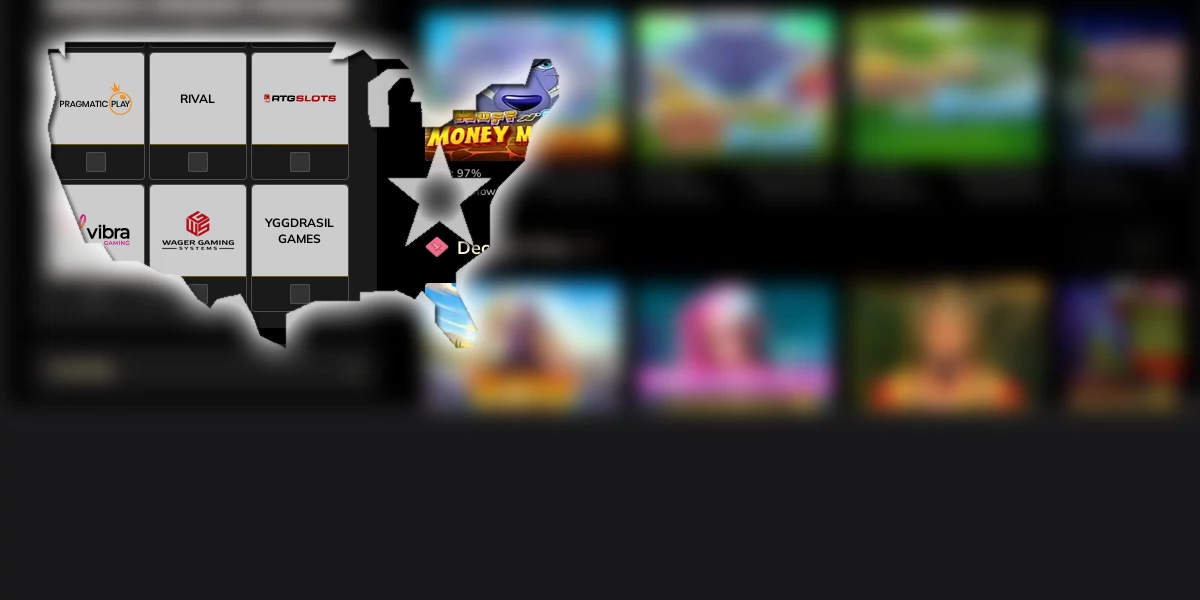
Blurred USA casino software providers list with US country icon that cuts through blurr and shows developers menu with options such as RTG Slots, Rival, Wager Gaming Systems, and others.

The best software for one market can be unavailable or unsuitable in another. Licensing, payment methods, language and game restrictions all change at the border. Players should start with their own jurisdiction and then compare casinos that actually accept players from that market.

United States

Online casino gambling is legal in a limited number of states, including New Jersey, Pennsylvania, Michigan, Connecticut, Delaware, West Virginia and Rhode Island. Each state has its own regulator, geolocation rules and approved providers. Bovada and BetOnline accept US players from states where their services are permitted, and both carry large game libraries built around US-friendly studios such as Rival, RTG, Betsoft, Dragon Gaming, Nucleus Gaming and Visionary iGaming. BetUS combines Betsoft, Dragon Gaming, Nucleus Gaming and Fresh Deck Studios. Slots Capital runs a compact Rival-led lineup with Betsoft, Dragon Gaming, Qora Gaming and Arrow's Edge, while Lucky Tiger mixes Dragon Gaming, RTG, Saucify and Visionary iGaming. Players should check state law before signing up because a casino that accepts one state may block another.

Canada

The best online casino software in Canada has to support CAD balances, Interac transfers and local payment methods. Ontario runs a regulated iGaming market through iGO, while other provinces use different frameworks and provincial monopolies. Those local rails matter for conversion. Tiki supports Interac alongside crypto and cards, which makes it a practical option for players who want a familiar banking rail. Players outside Ontario should confirm whether the casino accepts their province before depositing.

Global and Emerging Markets

Malta and UK licenses carry weight in Europe, while Curaçao and Anjouan licenses support many international brands. Latin America, Africa and Asia each have their own payment preferences, languages and regulatory direction. A casino that looks strong in one region may offer no local payment method in another. Players should prioritize sites that publish market-specific terms, currencies and support hours.

Operators face the same map from the other side. A platform that can switch languages, currencies, payment methods and game restrictions by market is far more valuable than one that requires a separate build for every country. Localization is not only translation. It covers help content, bonus rules, responsible gambling links and the order in which payment methods appear at checkout.

Players should treat regional restrictions as a practical test of a casino's software. If a site offers a currency but no withdrawal method for that currency, or advertises a local payment brand that fails at deposit, the localization is cosmetic. A short test of the cashier and support channel reveals more than a country selector on the homepage.

Frequently Asked Questions

Q

What is an online casino software provider?

An online casino software provider is a company that supplies part or all of the technology behind a gambling site. That can mean a game studio that builds slots, a platform vendor that manages accounts and wallets, an aggregator that connects many studios through one API or a white label supplier that provides a complete casino under its own license. Many well-known companies, including Playtech and Pragmatic Play, cover more than one of those roles.

Q

Which software provider has the most games?

Aggregators usually hold the largest catalogs because they combine content from hundreds of studios. Among individual studios, Playtech's library runs beyond 700 games, while NetEnt focuses on a smaller catalog of a few hundred titles. A larger catalog is useful, but the mix of slots, table games, live dealer content and regional favorites matters more than the raw total.

Q

Are casino software providers safe?

Established providers are licensed, tested and audited. NetEnt holds licenses in multiple jurisdictions and works with independent testing labs, while Playtech and Evolution operate under their own regulatory approvals. Safety also depends on the casino. A legitimate studio can supply games to an operator that handles withdrawals poorly. Players should check both the provider names and the casino license before depositing.

Q

Can one casino use more than one software provider?

Yes, and most large casinos do. AzurSlot lists 157 providers, Tiki lists 136 and Betibet lists more than 150. The casino connects the studios through direct integrations or an aggregator, then presents them in one lobby. Multiple providers reduce dependence on a single studio and give players more choice across slots, live dealer and table games.

Q

Does software affect withdrawal speed?

Software affects the withdrawal workflow, but it is not the only factor. The platform queues the request, checks bonus wagering and routes it to the payment provider. KYC, fraud review and the operator's approval policy can add more time. Crypto withdrawals at BetOnline, MyStake and Lucky Coin are fast because the payment rail settles quickly, not because the casino software alone is faster than every rival.

Q

What is the difference between a game studio and a platform provider?

A game studio builds the titles that players see, including the art, math and bonus features. A platform provider supplies the account system, wallet, bonus engine, CRM, reporting and integrations that run the casino. The studio sells content. The platform sells the operating system. Some companies, such as Playtech, supply both.

Q

Is mobile casino software as good as desktop software?

Modern HTML5 games deliver the same math and features on mobile and desktop. The difference comes from the casino frontend, the device and the connection. A well-built mobile lobby loads quickly, keeps the cashier usable and adapts live dealer streams to lower bandwidth. A poorly optimized site can make the same games feel slow and cramped on a phone.

Q

How much does it cost to launch an online casino?

A small white label casino can launch for under $100,000, while a directly licensed operator with a custom platform and several markets can spend $1,000,000 or more before launch. The total includes licensing, platform, content, payments, compliance, design, marketing and working capital. The software is only one line in the budget, and marketing often costs more than the platform itself.

Final Verdict on the Best Online Casino Software Providers

NetEnt is the strongest choice for slot players in 2026. Its catalog is smaller than the biggest aggregators, with roughly 200 titles, but Starburst, Gonzo's Quest and the Dead or Alive series have stayed relevant for years. The games average around 96 percent RTP, the studio holds licenses in several regulated markets and its platform tools include play limits and reality checks. For a casino that wants a dependable slot core, NetEnt remains the benchmark.

Evolution is the clear leader in live dealer content. Lightning Roulette, Crazy Time and a deep blackjack and baccarat menu cover the formats players actually ask for, and the acquisition of NetEnt and Red Tiger gives the group reach across live and slot content. Playtech is the better pick for operators who want one supplier for platform, content and live dealer services. Its 700+ game library and branded titles make it a full-stack option rather than a single-category studio.

Pragmatic Play offers the broadest mix for casinos that want slots, live tables, bingo and promotional tools from one partner. Big Bass Bonanza, Gates of Olympus and the Drops and Wins framework cover acquisition and retention at the same time. Microgaming remains the reference point for progressive jackpots, with Mega Moolah and a long-running library that suits operators targeting jackpot hunters.

Hacksaw Gaming and Nolimit City serve players who want high volatility and unconventional bonus mechanics. Betsoft is a better fit for cinematic 3D slots and accessible table games, while Play’n GO focuses on mobile-first slots such as Book of Dead and Reactoonz. Spribe is the best-known name in crash games through Aviator, and BGaming, Yggdrasil and Quickspin add distinctive content for casinos that want more than the largest catalogs.

For US-facing players, the practical shortlist looks different. Rival remains the most distinctive option because of its i-Slots, RTG brings the deepest progressive jackpot network for American casinos, and Dragon Gaming and Nucleus Gaming fill out the slot lobby at Bovada, BetUS and Lucky Tiger. Saucify adds classic slots, while Arrow's Edge brings bonus-buy titles, and Visionary iGaming and Fresh Deck Studios cover live blackjack, roulette and baccarat. WGS Technology and Qora Gaming round out the legacy and table-game side. The same rule applies: check the casino's state restrictions and the studio's certification before depositing.

The final decision should rest on four checks. Match the provider to the games the target audience actually plays. Confirm the studio is licensed and tested in the markets the casino serves. Test the integration on mobile and check the load time of the lobby. Confirm the provider supports the responsible gambling controls the license requires. A famous logo is not a strategy. The right supplier is the one that fits the market, the product mix and the operating model.