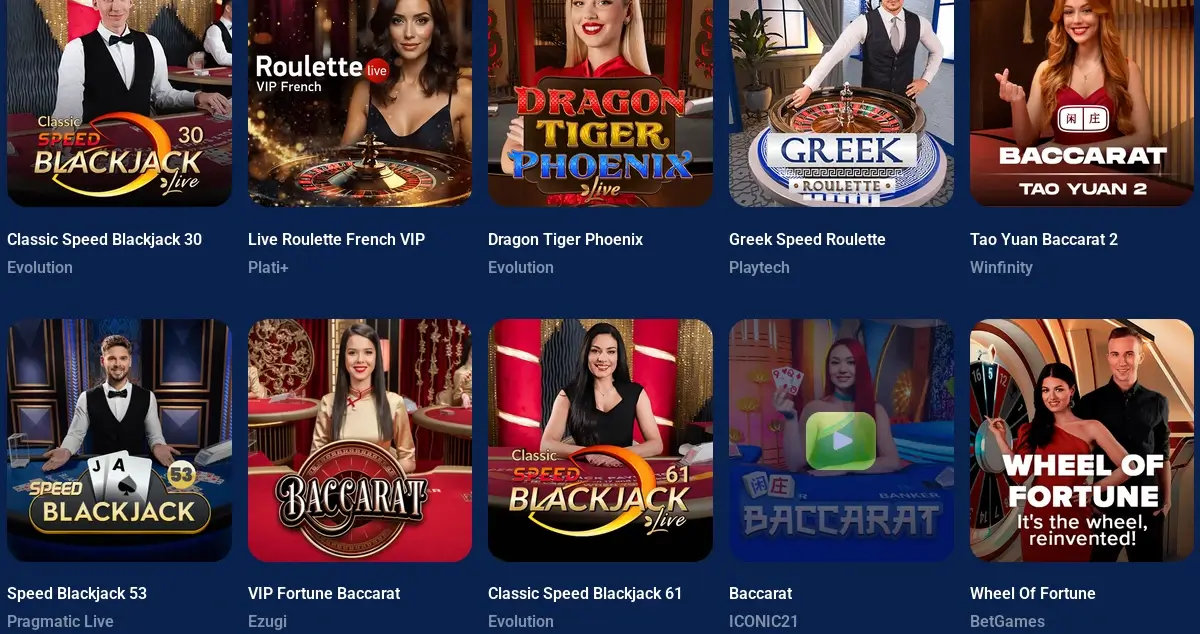
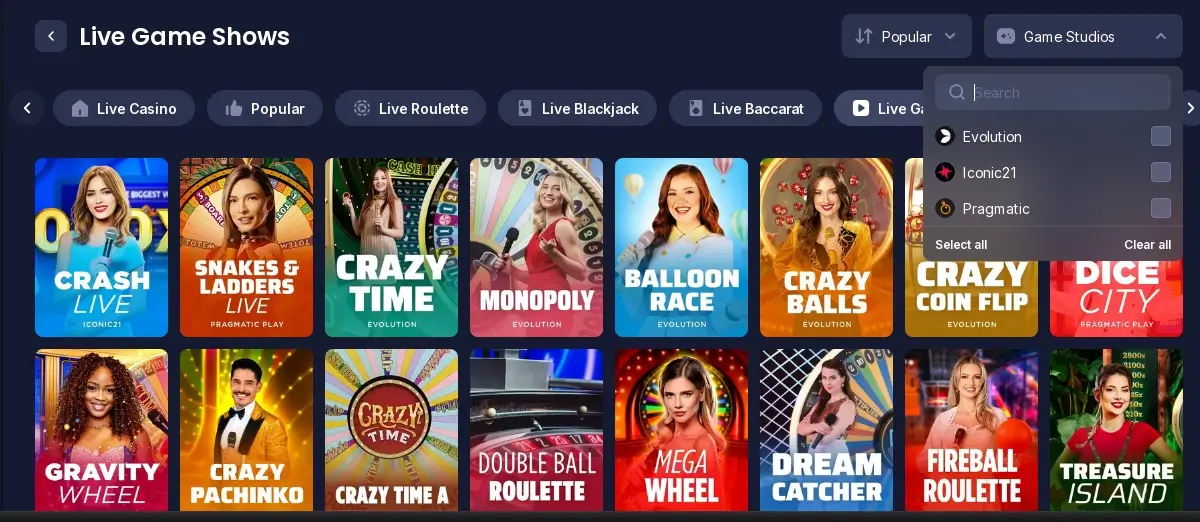
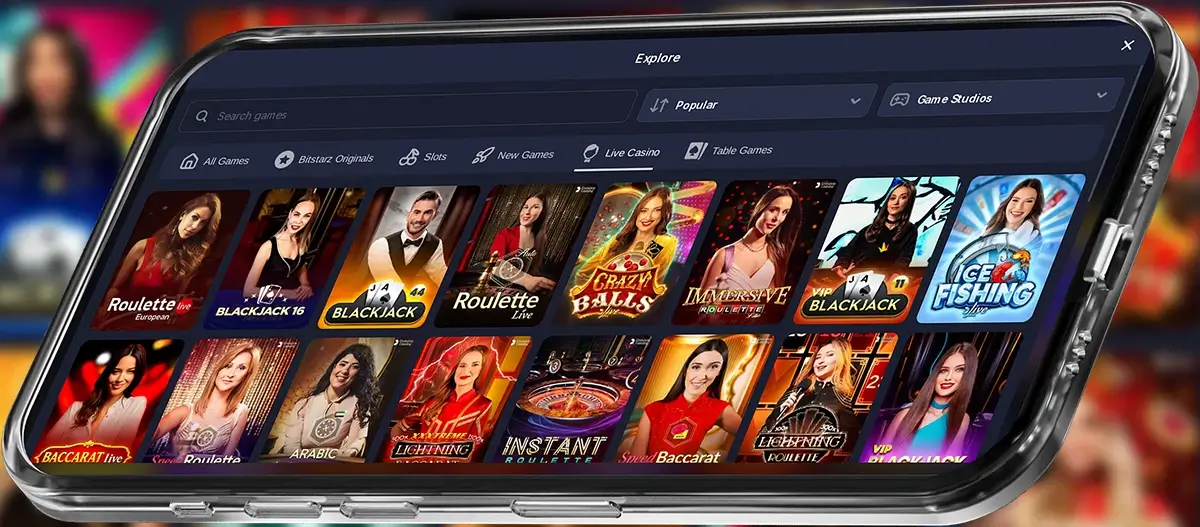
A live dealer casino removes the random number generator from the table and puts a real croupier on screen. Cards are dealt, wheels are spun and dice are rolled inside a studio or on a casino floor, and the result reaches the player through a video stream. The format has moved from a novelty for high rollers to a core product at most licensed operators, and the best live dealer casino now offers hundreds of tables, several languages and stakes that start below a dollar.
Our team reviewed a huge range of live casino sites for this guide. We opened the live dealer lobby at each one, checked the gaming studios behind the tables, tested stream quality on desktop and mobile, and read the bonus terms to check whether live dealer games count towards bonus requirements. We have also tested payment methods, casino licensing and customer support response times. The list below only includes online casinos with a full review in our database.
The range is wide. Some sites run a single Visionary iGaming studio with a few dozen tables. Then there are casino sites that carry 500+ live dealer tables from a huge number of studios and add tournaments, cashback and game shows in their offer. A casino player who wants a quiet blackjack session probably has different needs from a gambler chasing a Crazy Time multiplier, so this guide compares the sites and lists the pros and cons of every live online casino instead of treating them all as equal.
The sections below explain how live dealer games work, how they differ from RNG play, which game types are worth learning, how bonuses treat live tables and where the legal picture stands in the US and beyond.


A live dealer casino is an online operator that streams real tables from a studio or a land-based gaming floor. The croupier shuffles physical cards, spins a real wheel or rolls actual dice, and a camera sends the action to the player's browser. The player still clicks chips on a screen, but the outcome comes from the table rather than from a random number generator. That distinction is the whole product. It is also the short definition of what most players mean by live online casinos.
The live dealer online casino model depends on a studio built for broadcast. Tables sit under fixed cameras, cards are dealt from a shoe that can be sealed and swapped on camera, and a control room switches angles and monitors the feed. Optical recognition reads the cards and settles bets, while supervisors watch for irregularities. A licensed studio keeps round logs and a dispute trail, which matters when a player believes a hand was settled incorrectly.
The player sees a betting timer, a chat box and a set of chip buttons. Some live dealer tables allow bet behind, where a player wagers on another seat, and unlimited-seat formats let hundreds of players share one hand. Live dealer table limits usually start lower than a land-based table, and the pace is slower than an RNG game because every round waits for the dealer. The social element is real, but it is text chat rather than a conversation across the felt.
The live casino software is not the same at every operator. A site can license a full live dealer platform from a studio, integrate individual tables through an aggregator, or run a white-label product under its own brand. That is why two casinos can show the same Evolution logo and offer different limits, different languages and different bonus terms. The logo tells a player who built the table, not who protects the account.
The live dealer lobby is also a shop window. A casino that lists hundreds of tables but only one studio is offering depth in one direction. A casino that lists fewer tables across several studios is offering variety. Neither approach is automatically better. The right mix depends on whether a player wants a familiar blackjack table, a localized Teen Patti room or a game show with a presenter.
An RNG casino game decides every result with a certified random number generator. The software is tested by independent labs, the return to player is published, and the outcome is independent of anything a player does. Live dealer games use physical equipment, so the shuffle, the wheel and the dice are visible. The return still depends on the rules and the bet type, but the randomness comes from the equipment rather than from code.
Trust is the main reason players move to live tables. A sceptical gambler can watch the shuffle and the deal instead of accepting a certificate. The trade-off is pace. An RNG blackjack table can deal hundreds of hands per hour, while a live dealer table runs at the speed of the croupier. Playing fewer hands per hour stretches a bankroll, but it also slows bonus clearing and reduces the number of decisions in a session.
| Feature | Live dealer games | RNG casino games |
|---|---|---|
| Outcome source | Physical cards, wheel or dice | Certified random number generator |
| Pace | Dealer-controlled, usually 40 to 80 hands per hour | Player-controlled, often several hundred hands per hour |
| Table limits | Usually $1 to $5,000, with VIP rooms above that | Wider range, including micro-stakes |
| Game range | Dozens of tables across a few core games | Thousands of titles across slots, tables and speciality games |
| Bonus contribution | Often 0% to 20% | Usually 100% on slots, lower on tables |
| Social element | Live chat with the dealer and other players | None |
| Mobile data | Continuous video stream | Small data footprint |
| Transparency | Visible shuffle, deal and spin | Published return and lab certification |
Neither format is better in every case. A player who wants a long session at low stakes will find more choice in RNG tables. A player who wants to watch the wheel and chat with a dealer will accept the slower rhythm. The mistake is assuming that live dealer games are automatically fairer. They are only as fair as the studio and the licence behind them.
Bonus terms are where the difference hits hardest. Most live casino bonuses are ordinary welcome offers with a reduced contribution rate for live tables. A player who ignores that detail can wager for hours and clear almost nothing. A player who is playing live dealer games for the atmosphere should treat the bonus as a separate decision, not as part of the table experience.
Live dealer casino games fall into six families. Blackjack and roulette dominate by table count, baccarat carries the highest stakes in Asian markets, poker variants fill the gap for players who want a decision-heavy game, game shows add a bonus round, and dice games cover the niche. The most popular live dealer games are not always the best value. A game show can be entertaining and still return less than a plain European roulette table.
Blackjack is the best live table for a player who wants control. Basic strategy reduces the house edge to roughly 0.5% on a good rule set, and the decision points keep the session engaged. Infinite Blackjack publishes a 99.6% return and seats unlimited players, while Blackjack 46 Ruby reaches 99.5%. Side bets such as Perfect Pairs and 21+3 add variance and a higher house edge, so they work better as an occasional extra than a main plan.
Roulette is the simplest live game to follow and the easiest to misread. European single-zero wheels carry a 2.7% house edge, American double-zero wheels carry 5.26%, and multiplier variants such as Lightning Roulette publish around 97.3% return. The multiplier does not improve the base return, it redistributes it. A player who wants the best odds should pick a single-zero table and treat the bonus wheels as entertainment.
Baccarat looks complicated and plays in seconds. The Banker bet carries the lowest house edge, roughly 1.06% on a standard commission game, and the Player bet sits close behind. Speed Baccarat and No Commission Baccarat change the pace and the payout structure, while squeeze tables let the player reveal the cards. Speed Baccarat 1 publishes a 98.9% return, which makes it one of the stronger live options for a patient player.
Live poker at a casino is not a cash game against other players. It is a house-banked variant such as Three Card Poker, Caribbean Stud, Casino Hold'em or Ultimate Texas Hold'em. Three Card Poker publishes around 96.5% return, and the pair plus side bet carries a different edge from the main ante. These games suit players who want a poker flavour without the variance of a tournament.
Game shows combine a presenter, a physical set and a bonus round. Crazy Time, Monopoly Live, Dream Catcher, Funky Time and Mega Wheel are the common titles, and each one publishes a return below a standard table. Crazy Time sits around 95.4% and Monopoly Live around 96.1%. The format is designed for short, high-variance sessions, not for grinding a bonus.
Dice and Asian table games fill the rest of the lobby. Sic Bo is roulette with three dice, Dragon Tiger is a two-card comparison, and craps brings the full land-based ritual to a stream. Andar Bahar and Teen Patti cover the Indian market, and 32 Cards and Fan Tan appear at the larger studios. These games are easy to learn and usually carry a higher house edge than blackjack or baccarat.
The live dealer options in a typical lobby go deeper than the six names. Each family carries variants. Blackjack splits into classic, speed, VIP and unlimited formats. Roulette splits into European, French, American and multiplier wheels. Baccarat splits into speed, squeeze and no-commission tables. The table count matters less than the variety inside each game. A lobby with 100 blackjack tables but one rule set is less useful than a lobby with 40 tables across four formats.
| Game | Example table | Published return | Studio |
|---|---|---|---|
| Blackjack | Infinite Blackjack | 99.6% | Evolution |
| Blackjack | Blackjack 46 Ruby | 99.5% | Evolution |
| Baccarat | Speed Baccarat 1 | 98.9% | Evolution |
| Roulette | Lightning Roulette | 97.3% | Evolution |
| Roulette | Mega Roulette | 97.3% | Evolution |
| Poker | Three Card Poker | 96.5% | Evolution |
| Game show | Monopoly Live | 96.1% | Evolution |
| Game show | Crazy Time | 95.4% | Evolution |
Players who are new to live dealer games should start with a low-limit blackjack or European roulette table. The rules are visible, the chat is active and the minimum bet is usually a dollar or less. Game shows and multiplier roulette are better once the player understands the base game and has a separate budget for the bonus rounds. A player who wants to learn the rhythm of a live casino game should watch a few rounds before placing a bet.
Live casino bonuses are rarely standalone offers. Most operators attach the welcome package to slots and then set a contribution rate for live tables. The rate can be 0%, 10%, 20% or a full 100%, and the difference decides whether a bonus is worth claiming. A live dealer casino bonus that looks generous on the landing page can be almost impossible to clear on live play alone.
The arithmetic is simple. If a player claims a $100 bonus with a 35x wagering requirement, the target is $3,500 of eligible wagering. At a 20% live contribution rate, the player needs $17,500 of live table bets to clear the same bonus. At 0%, no amount of live play will clear it. That is why the first check is always the game contribution table, not the headline percentage.
Many live dealer online casinos now offer cashback and tournaments as an alternative to playthrough bonuses. 5Gringos returns 25% of live casino losses every Monday with no wagering. Wild.io pays 10% daily cashback on live dealer losses through the LIVE code. Winrolla runs 25% weekly cashback that applies to live casino play only. Lucky Coin pays rakeback and cashback as real cash with zero wagering. These offers do not depend on a playthrough target, which makes them more useful to a table player.
| Casino | Live play contribution | What it means |
|---|---|---|
| Cashy | 20% | Live tables count at one fifth of the slot rate |
| BetOnline | 10% | Table games slow the clearing pace |
| Bovada | 0% | Live dealer play does not count |
| CasinoMax | 0% | Live dealer play does not count |
| EveryGame | 0% | Live dealer play does not count |
| Tsars | 0% | Live dealer play does not count |
| MyStake | Blocked | Live casino play is blocked while a bonus is active |
| SuperSlots | Excluded | The crypto welcome bonus excludes live dealer games |
The other terms matter as much as the contribution rate. A maximum bet of $5 or $10 while a bonus is active rules out most high-limit tables. A sticky bonus disappears when the player requests a withdrawal. A 7-day expiry can run out before a live player clears a large target. A maximum cashout cap can turn a big win into a smaller payout. Read those four terms before claiming any live dealer welcome bonus.
A player who wants to clear a bonus and play live tables should clear the slots portion first, then move to live play with a clean balance. That approach is allowed at most operators and avoids the trap of wagering on a game that contributes nothing. The alternative is to skip the bonus and keep the withdrawal simple, which is often the better choice for a live-focused player.

Live casino software decides the camera angles, the dealer training, the language support and the rule set. A casino can carry one studio or a dozen, and the mix explains why two lobbies feel different. The studios below appear across the casinos in this guide, and each one has a distinct strength.
Evolution is the benchmark. The group operates purpose-built studios in Europe, North America and Asia, and its tables cover blackjack, roulette, baccarat, poker, craps, Sic Bo and game shows. Lightning Roulette, Crazy Time and Monopoly Live are the flagship titles. The scale gives players more tables, more languages and more stake levels, but it also means the Evolution name appears at operators with very different standards.
Pragmatic Play Live is the closest challenger in table count. The studio built its reputation on mobile-first tables and quick releases, and Mega Wheel is its best-known show. Cashy lists 218 Pragmatic Play Live tables, which shows how deep the catalogue can go. The interface is clean and the dealer presentation is lively, which suits players who want a modern lobby rather than a traditional studio set.
Playtech runs a global studio network with premium sets and branded tables. Quantum Roulette is the best-known multiplier title, and the live floor covers blackjack, roulette, baccarat, poker and game shows. 5Gringos lists 41 Playtech baccarat tables and 13 Playtech game shows, which shows the depth available when an operator commits to the studio. The brand is strongest in European and Asian markets.
Ezugi is part of Evolution and focuses on localized formats. Andar Bahar, Teen Patti, 32 Cards and Lucky 7 sit alongside core blackjack, roulette and baccarat, often with chat in Hindi or another local language. The studio is a strong choice for players outside the Western European mainstream, and its tables appear at BitStarz, Lucky Coin, Wild.io and Tsars.
Visionary iGaming is the workhorse for US-facing operators. BetOnline, Bovada, CasinoMax, Decode, EveryGame, Lucky Tiger and SuperSlots all use the studio for blackjack, American and European roulette, baccarat and Super 6. The product is less flashy than an Evolution show, but the tables are stable and the limits suit the US market. Super 6 is the studio's signature side bet.
BetGames adds lottery, dice and money-wheel formats with a sportsbook feel. OnAir Entertainment supplies sleek blackjack and auto roulette under the Games Global umbrella, and 5Gringos lists 102 OnAir blackjack tables. These studios fill the gap between a classic live table and a fast casino game, which suits players who want a quick session rather than a full shoe.
The live dealer software market is concentrated at the top. Evolution, Pragmatic Play Live and Playtech supply most of the tables at the casinos in this guide. The smaller studios matter for regional coverage and for operators that want a different look. A player who sees a studio name in the lobby can check the table rules and the return before sitting down. A player who sees only a generic live dealer logo should ask which studio is behind it.
The provider mix also affects the bonus terms. Some operators exclude tables from a specific studio, or count them at a different rate. A live dealer casino bonus that names Evolution but excludes Pragmatic Play is a warning that the terms were written around a marketing deal rather than what players need. The review for each casino in the list above explains the studio mix and the contribution rules.

Most live dealer sites are browser-first. The lobby, the stream, the cashier and the support chat all run inside a mobile browser, and no download is required. A live dealer app is the exception rather than the rule. That is good news for storage and updates, and bad news for players who want a home-screen icon.
The browser experience has improved to the point where the difference is small. A modern phone can decode an HD stream, place a bet and open chat without lag. The constraints are screen size and data use. A live dealer table with a multi-camera view and a side-bet panel is cramped on a 6-inch screen, and an hour of HD video can consume a gigabyte or more. Players on mobile data should lower the stream quality or use Wi-Fi.
| Mobile browser | Native app |
|---|---|
| No install or storage cost | Requires a download and updates |
| Works on iOS and Android | May be limited to one platform |
| Full lobby and cashier in one tab | Faster launch and home-screen access |
| Stream quality depends on the browser and connection | Can manage power and data better |
| Easy to switch between tables | Multi-table play is usually easier |
BetOnline is the clearest example of an operator with a native option. The casino runs a dedicated mobile live casino app with push notifications, and the live dealer section works inside it. BitStarz, Wild.io, Lucky Coin and most of the crypto sites stay browser-only. SuperSlots and Bovada use responsive lobbies rather than an app installation. None of these differences change the game rules, but they change how quickly a player can reach a table.
The live dealer casino apps that do exist are usually tied to a poker client or a sportsbook. A player who wants one icon for everything should check the operator's mobile page before signing up. A player who is happy with a browser shortcut can use the Add to Home Screen option in Safari or Chrome, which creates a PWA-style icon without an app store listing. That shortcut is the closest thing to a live dealer casino app at most sites.
Mobile live dealer games are not a separate product with different odds. The same table, the same dealer and the same rules run on the phone and on the desktop. The only differences are the screen, the connection and the amount of data the stream consumes. A player who can see the cards and reach the bet buttons has everything needed to play.
Live dealer online casino games are legal in US states that license real money online casino gaming. The list currently includes New Jersey, Pennsylvania, Michigan, West Virginia, Connecticut, Rhode Island and Delaware, with different rules in each market. A player must be at least 21 in most of those states and must be physically located inside the state when placing a bet. A real money live dealer casino in a regulated state operates under a state licence and reports to a state regulator.
The regulator matters. New Jersey Division of Gaming Enforcement, Pennsylvania Gaming Control Board, Michigan Gaming Control Board, West Virginia Lottery Commission, Connecticut Department of Consumer Protection and Rhode Island Department of Business Regulation each maintain a list of approved operators and games. A licensed app in one state is not automatically licensed in another. A player who crosses a state line has to check the local rules before logging in.
Offshore live casinos accept US players in states without a regulated market, but they do not carry the same consumer protection. A dispute with an offshore operator goes to the operator's licensing authority, not to a state regulator. That does not make every offshore site unsafe, but it changes the recourse available when a withdrawal is delayed or an account is closed. The casinos in this guide are reviewed individually, and the licence for each one is listed in its review.
The practical check is simple. A regulated site names its state licence, its regulator and its permitted games. It uses geolocation, age verification and responsible gambling tools. It pays through domestic rails and reports to the state. An offshore site may offer a bigger bonus and more payment methods, but it cannot offer the same complaint route. A player who values protection should start with the regulated market and compare the offshore option only after reading the terms.
A player searching for the best live online casino should also check the game list, not just the licence. A state-licensed operator may carry only one studio and a few dozen tables. An offshore site may carry 500 tables from 14 studios. The trade-off is protection versus variety, and each player has to decide which matters more. The reviews in this guide explain both sides for every casino in the list.
Live dealer rules are set by the regulator in each market, not by the studio that supplies the tables. The cards below summarise the licensing position in the main English-speaking markets and link to more detail on each one.
| Market facts | |
|---|---|
| Regulator | State boards |
| Licence | State |
| Player age | 21+ in most states |
| Status | State-by-state |
| Market facts | |
|---|---|
| Regulator | UKGC |
| Licence | National |
| Player age | 18+ |
| Status | Fully regulated |
| Market facts | |
|---|---|
| Regulator | AGCO / iGO |
| Licence | Provincial |
| Player age | 19+ in Ontario |
| Status | Province-by-province |
| Market facts | |
|---|---|
| Regulator | ACMA |
| Licence | Not permitted |
| Player age | 18+ |
| Status | Online casino ban |
| Market facts | |
|---|---|
| Regulator | Provincial boards |
| Licence | Provincial |
| Player age | 18+ |
| Status | Licensed per province |
| Market facts | |
|---|---|
| Regulator | GRAI |
| Licence | National |
| Player age | 18+ |
| Status | New licensing regime |
| Market facts | |
|---|---|
| Regulator | MGA / Gibraltar |
| Licence | National hubs |
| Player age | 18+ |
| Status | Cross-border hubs |
The pattern is consistent. A serious live casino site names its licence, its regulator and the markets it serves, and it does not hide that information behind a generic footer.
The best live casinos share three habits. They publish the licence and the company behind it, limit the markets they accept to places where they hold a licence, and provide responsible gambling tools that work. A player who checks those three things before depositing will avoid most of the operators that should not be trusted with a balance.
The live dealer casino sites in this guide have each been through a full review. Our process starts with the licence and ends with a withdrawal. The live dealer section is tested the same way as the slots and the cashier, and the steps below explain what we check and why it matters. The best live casino sites pass all six steps, while the weaker ones fail at least one of them.
We look for the company name, the registration number and the regulator. A site that shows only a brand and a payment address is not giving a player a complaint route. We check the number against the regulator's register where one is published.
A live dealer lobby can claim hundreds of tables and still be thin. We count the blackjack, roulette, baccarat, poker and game show tables, then check which studios supply them. A lobby with one studio and one rule set is less useful than a lobby with five studios and multiple limits.
We open the same table on a desktop, a phone and a tablet, on Wi-Fi and on mobile data. We look for latency, dropped frames, audio quality and camera work. A stream that stutters at peak hours is a problem even if the table rules are good.
We record the minimum and maximum bet, the number of seats, the side bets and the rule variations. A $1 minimum is not useful if the table is always full, and a $5,000 maximum is not useful if the rules are poor. We compare the published return where the game panel shows it.
We check the contribution rate, the maximum bet, the expiry, the maximum cashout and the list of excluded games. A live dealer casino bonus that excludes live play is not a live bonus. We also check whether the bonus is sticky and whether a withdrawal forfeits it.
We make a small deposit and request a small withdrawal before claiming a large bonus. We time the pending period, note the fees and check the KYC process. We also open the live chat and ask a specific question about live table limits or bonus contribution. A generic answer is a warning sign.
The score is not a single number. A casino can be strong on table depth and weak on withdrawals, or strong on bonuses and weak on licensing. The review explains the trade-off, and the top live dealer casinos in the list above are ranked on the balance that matters for live play. A player who wants the deepest lobby should start with MegaPari. A player who wants the best game show floor should start with Lucky Coin. A player who wants two limit tiers in one account should start with SuperSlots.
Live dealer games are slower than RNG games, but the money can still move quickly. A player who joins a high-limit table after a bad run can lose a session bankroll in a few hands. The tips below are the ones we use in our own testing. Players who play live casino games for real money should treat the list as a checklist before the first bet.
Decide the amount before the first bet and leave when either line is hit. The slower pace of a live table makes it easy to keep playing, and the chat makes the session feel social. A hard limit protects the bankroll from that atmosphere.
Single-zero roulette, S17 blackjack and the Banker bet in baccarat carry the lowest house edges. Multiplier roulette and game shows carry a higher edge and a bigger swing. A player who wants a long session should start with the lower-edge table.
Basic blackjack strategy is published and easy to memorise. A simple staking plan for roulette or baccarat is enough for most players. The goal is to avoid decisions made in the moment, because the dealer controls the clock and the pressure is real.
Open the table and watch the stream, the dealer and the betting timer. Check whether the camera shows the cards, whether the chat is active and whether the limits suit the bankroll. A table that looks sloppy before the first bet will not improve after it.
Perfect Pairs, 21+3, pair plus and the various multiplier bets carry a higher house edge than the main game. They can add a large payout to a small stake, but they are not a reliable way to grind a bonus. Set a separate budget for them or skip them.
If the live contribution rate is 20% or lower, clear the bulk of the wagering on slots or another eligible game, then move to live tables with a clean balance. A player who tries to clear a slots bonus on live blackjack will usually run out of time.
Check whether the deposit method can receive a withdrawal. Prepaid cards and some credit cards cannot. Crypto usually pays fastest, while bank transfers take longer and may carry a fee. A player who wins should already know which route to use.
The last tip is the least popular. Stop when the session stops being fun. Live dealer games are designed to feel like a night at a casino, and the atmosphere can hide how much time has passed. A reality check every 30 minutes is a simple habit that keeps the session under control.
A live dealer lobby can look professional and still sit on a weak operator. The stream comes from a studio, not from the casino, so a polished table tells a player very little about the company holding the money. The warning signs below are the ones that matter before a deposit. Our top recommended live dealer rooms pass all six checks.
A safe site publishes the licence number, the regulator and the legal entity. If the footer shows only a brand name and a support email, the player has no complaint route. A Curacao or Anjouan licence is weaker than a UK or Malta licence, but it is still better than no licence at all.
A welcome offer that looks large can exclude live tables from wagering or cap the maximum bet at $5. The terms page should state the contribution rate in plain language. A site that buries that detail in a PDF is not being transparent.
A genuine live table shows the dealer, the cards and the betting history. If the chat is disabled, the history is missing or the camera avoids the shoe, the player cannot verify the action. That is a red flag for a studio that is cutting corners.
A cashier that processes small deposits quickly and then demands documents for every withdrawal is a common pattern. The verification process should be clear, and the pending period should be published. A site that changes the rules after a win is not safe.
The rules panel should name the game, the bet limits, the side bets and the return. A table that hides the return or changes the rules between rounds is not giving the player a fair chance. A licensed studio publishes this information.
A site that sends constant bonus messages, removes withdrawal options or makes support hard to reach is putting revenue ahead of the player. Responsible gambling tools should be easy to find and easy to use. A live dealer casino that hides them is not a good host.
The safest choice is a licensed operator with a clear cashier and a live lobby that names its studios. The best live dealer casino is not the one with the biggest bonus. It is the one that pays when the player wins and answers when something goes wrong. A player who checks the licence, the studio list and the withdrawal terms before depositing will avoid most of the sites that should be avoided.
The list below is about the format, not about a single operator. Live dealer play solves some problems and creates others, and a player who understands both will choose better tables and better bonuses. The points apply to the casinos in this guide unless a review says otherwise.
The format suits a player who wants transparency and atmosphere more than volume. A player who wants to grind a bonus, chase a jackpot or play hundreds of hands per hour is better served by RNG games. The strongest live casino sites offer both, and the player can move between them without changing the account.
They can be, when the studio and the operator are licensed. The outcome comes from physical cards, a wheel or dice, and the stream shows the action. Licensed studios use optical recognition, sealed shoes, fixed dealing procedures and round logs, and independent auditors review the operation. A site that hides the studio name or the licence is not giving a player enough evidence.
Yes. A licensed live dealer casino pays real cash on winning hands, spins and bets, the same as any other real money game. The outcome is still a game of chance, and no strategy guarantees a profit. A player should treat the session as entertainment and set a budget before the first bet.
Yes. Most licensed casinos stream live tables through a mobile browser in HD, and no app download is required. The exceptions are operators with a native poker or casino app, such as BetOnline. A player on mobile data should watch the usage, because an hour of HD video can consume a gigabyte or more.
There is no single answer for every player. MegaPari leads on table depth with more than 500 tables from 14 studios. Lucky Coin leads on game shows with eight live titles and zero-wager rewards. SuperSlots leads on high-limit play with two separate lobbies. A player should match the lobby to the games they enjoy and check the bonus terms before depositing.
Live tables usually carry a lower house edge than slots, so operators reduce their contribution to protect the bonus margin. A 20% rate is common, and a 0% rate is not unusual. The result is that a bonus can take five times longer to clear on live play, or never clear at all. The contribution table in the terms is the only reliable source.
Many tables offer bet behind, which lets a player wager on another seat even when all seats are taken. Unlimited-seat formats such as Infinite Blackjack let hundreds of players share one hand. A player can also move to another table of the same game, because the larger studios run multiple tables at different limits.
They are legal in states that license real money online casino gaming, including New Jersey, Pennsylvania, Michigan, West Virginia, Connecticut, Rhode Island and Delaware. A player must be inside the licensed state and meet the age requirement. Offshore sites may accept players from other states, but they do not carry the same state-level protection.
A standard-definition stream uses roughly 300 to 500 megabytes per hour, and an HD stream can use a gigabyte or more. The exact figure depends on the studio, the quality setting and the device. A player who plans a long session should use Wi-Fi or lower the stream quality in the table settings.
MegaPari takes the top spot for live play. The lobby carries more than 500 tables from 14 studios, and the mix covers classic blackjack, multiplier roulette, Asian table games and game shows. Infinite Blackjack publishes a 99.6% return, weekly live tournaments add a leaderboard, and the welcome package reaches $1,500 plus 150 free spins. The trade-offs are a 24- to 48-hour document check on the first withdrawal and live chat coverage that thins out overnight.
Lucky Coin is the best pick for game show fans. Evolution supplies 55 dedicated tables and Pragmatic Play Live adds 14 more, with eight live game shows including Crazy Time, Funky Time and Monopoly Big Baller. Teen Patti and Caribbean Stud Poker cover the non-standard formats. Rakeback and cashback pay as real cash with no wagering, which suits a live player better than a playthrough bonus. The Anjouan licence is the main weakness.
SuperSlots is the best choice for a player who wants two lobbies in one account. The Red room runs $1 to $1,000 tables on Visionary iGaming, and the Black room runs $25 to $5,000 tables on Fresh Deck Studios. The Diamond Super 7s side bet adds a progressive jackpot to live blackjack. The crypto welcome bonus excludes live dealer play, so a player who wants the bonus should clear it on slots first.
BetOnline and BitStarz fill the US and crypto niches. BetOnline pairs Visionary iGaming and Fresh Deck Studios with a $5,000 table limit and a native mobile app. BitStarz carries more than 100 live tables from Evolution, Vivo Gaming, Ezugi and AsiaGaming, plus a 500-crypto cashier and fast withdrawals. BitStarz requires KYC before a payout, and BetOnline counts table games at only 10% toward bonus wagering.
Cashy, 5Gringos, Wild.io and Winrolla are the value picks for live cashback. Cashy runs 338 live titles and counts live play at 20% toward the welcome bonus. 5Gringos returns 25% of live losses every Monday with no wagering. Wild.io pays 10% daily cashback on live dealer losses, and Winrolla applies 25% weekly cashback to live casino play only. Each one has a trade-off in licensing, withdrawal speed or language support.
The rest of the list covers specific needs. AzurSlot and OnlyWin offer the largest live lobbies, with more than 400 and 1,213 live games respectively. SafeCasino adds roughly 900 tables and 63 game shows. Bovada and MyStake cover US and crypto players with different provider mixes. Tsars, EveryGame, Lucky Tiger, Decode and CasinoMax run smaller Visionary iGaming or Evolution floors, and AllStars adds a no-KYC crypto option. None of them is perfect, and the review for each one explains the weakness that matters.
The best live dealer casino for a specific player depends on three things. The tables have to match the games the player enjoys, the bonus terms have to allow live play, and the cashier has to pay without friction. A player who checks those three things before depositing will avoid most of the problems that appear after a win. The live online casino market is crowded, but the shortlist above is a reliable place to start. Live dealer games reward patience more than heat, and the player who controls the session usually gets more from it.